How to choose a personalized book a toddler will actually love

A toddler book has to do real work. It gets dropped, carried, chewed on, begged for again, and read when everyone is tired. Personalization only matters if the book still feels good in a child's hands.
Start their book: upload the photo, see a free preview

Start with the format, not the story

Most personalized books are printed as hardcovers or softcovers because that is cheaper to produce at odd page counts. For a child under three, that is the wrong object. Paper pages tear, dust jackets come off in a week, and a hardcover on a toddler's foot hurts. Look for a real board book: thick chipboard pages, rounded corners, a wipeable finish. If the product page does not say what the pages are made of, assume paper.

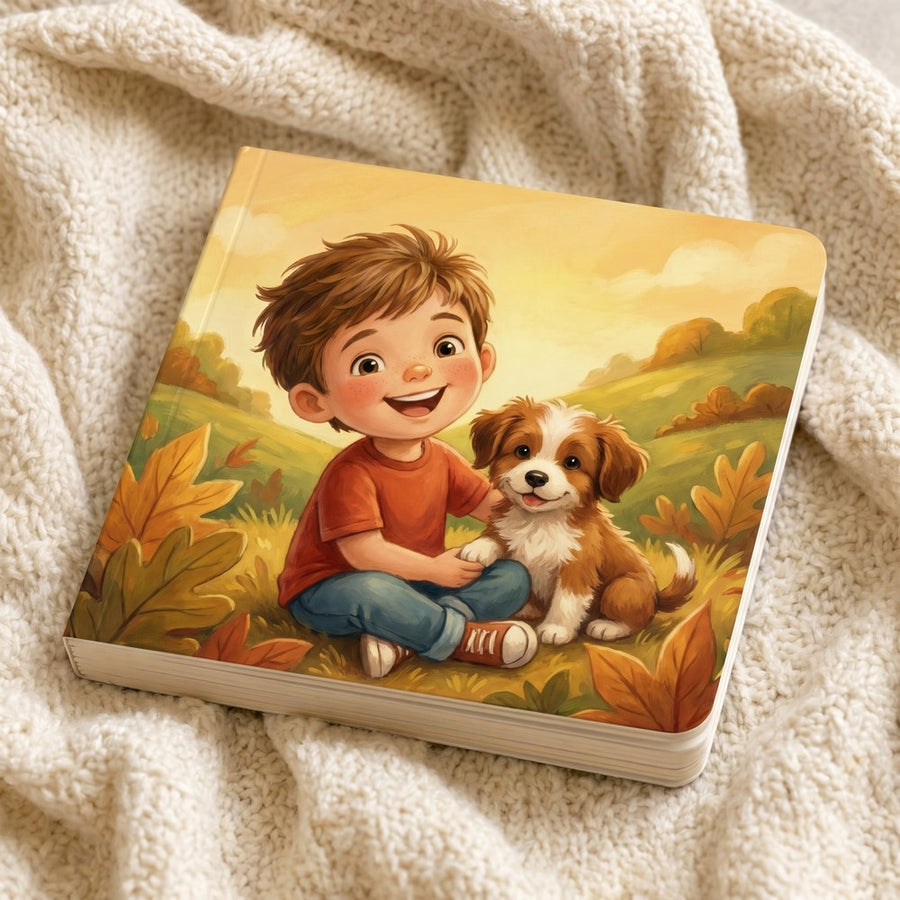
TinyStar's printed book is a 6 by 6 inch board book with 20 chipboard pages a sixteenth of an inch thick, matte laminate, rounded corners. The same construction as the board books already in the crib.

Then ask how personalized it really is

There is a wide range. At one end, a stock story where the name is swapped in and a generic child is drawn from a checklist: hair color, skin tone, glasses or not. At the other, a story written for this child's age and the details a parent gave, with the child drawn from their own photo. Both get called personalized. The second is the one a toddler recognizes.

The test: does the book know something about your kid that a form could not have guessed? The stuffed rabbit that goes to daycare. The way they say "ready, set, go" before every stair. If you can put those in, the book is theirs. If the form only asks for a name and a hair color, it is a name-swap.

An open personalized board book showing an illustrated spread

Read a page out loud before you buy

Toddler books get read five hundred times. Rhythm matters more than plot. For a one year old you want short lines, one idea per page, and a phrase that comes back so they can join in. For a three year old you want a small problem that gets solved. If a preview is available, read one page out loud in your head. If it sounds like a greeting card, keep looking.

Check the photo terms

You are uploading a picture of your child. You should not have to guess what happens to it. Look for four plain answers: who receives the photo, whether it trains anything, when it gets deleted, and whether a person reviews the finished pages before printing. TinyStar's answers are here, including the deletion schedule.

Check the exit

Personalized books have more places to go wrong than ordinary ones. A likeness can miss. A print can smudge. The question is what happens then. A guarantee that offers a redo or a refund within a stated window is the sign of a shop that checks its own work. Here is TinyStar's, 30 days from delivery, your choice of redo or refund.

Price it against what it replaces

A personalized board book at $49 is not competing with a $9 board book. It is competing with the other gifts at that price that will be outgrown in a season. The board book is still on the shelf when they are ten. If you are buying for two kids, two are $89 together with free US shipping.

See a free preview from one photo. Or read what changes in the story between ages one and three.

Questions parents ask

What age is TinyStar best for?

The printed TinyStar board book is best for ages 1 to 6, especially families who want a sturdy read-aloud keepsake.

Are the pages paper or board?

Board. Every page is chipboard a sixteenth of an inch thick with a matte laminate and rounded corners, 20 pages, 6 by 6 inches.

How do I know if a book is really personalized?

Ask whether the child is drawn from your photo or built from a checklist, and whether the story uses details a form could not guess. A name typed into a stock story is a name swap, not a personalized book.

Start their book: upload the photo, see a free preview